Concept
A lounge at the charger
Drive Lounge is a prefabricated building placed on the charging site and run without staff. Toilet, heat, light and a place to sit. Three configurations on the same shell, from a plain WC lounge to an unmanned store.
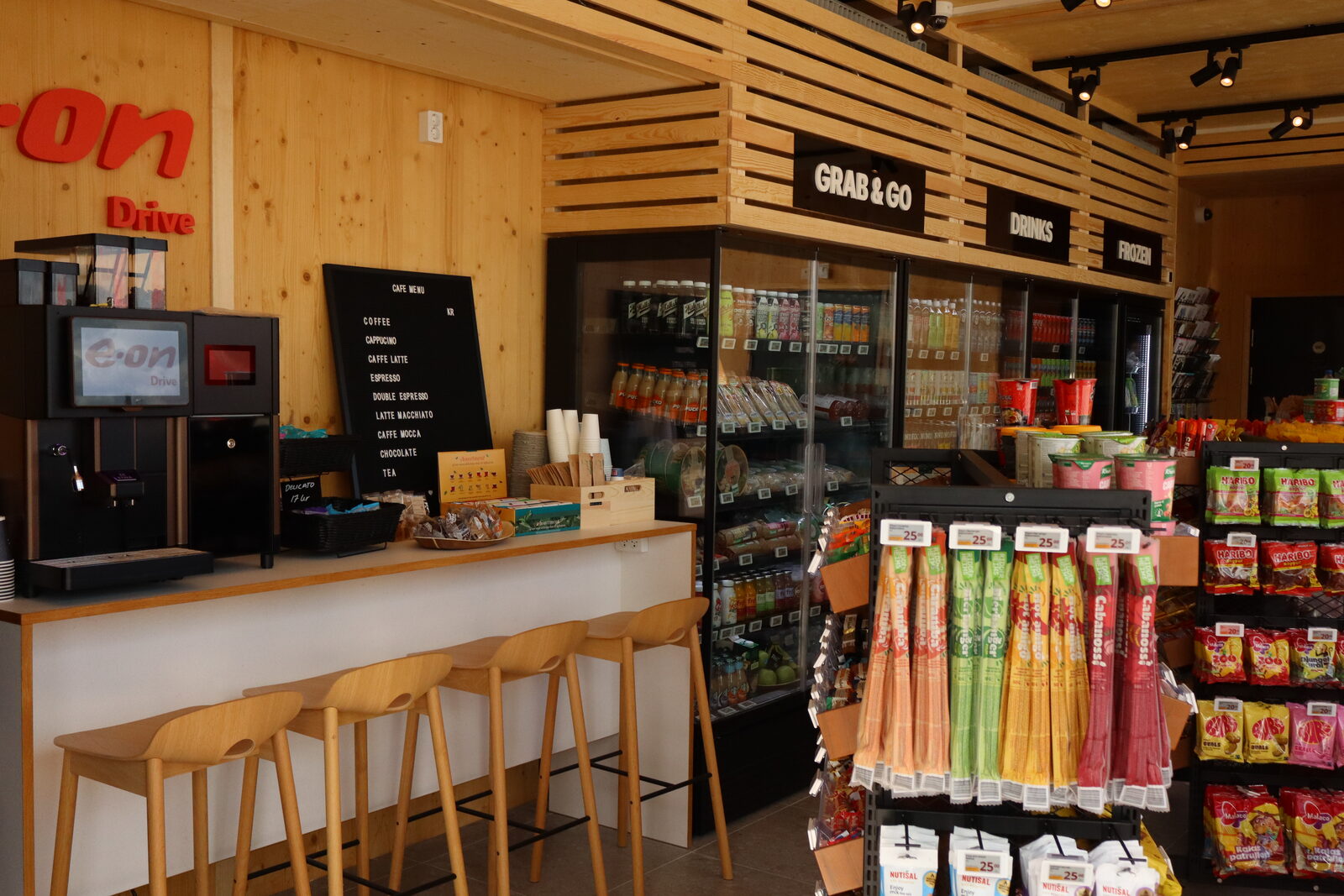
Concept
Drive Lounge is a prefabricated building placed on the charging site and run without staff. Toilet, heat, light and a place to sit. Three configurations on the same shell, from a plain WC lounge to an unmanned store.
A driver at a fast charger has twenty to forty minutes and nothing to do with them. The site was designed around the cable, not around the person waiting for it. Where something has been added it is usually a vending machine in a car park, or a shop that closed at six.
Operators compete on power, price and uptime. Drivers, once a network is dense enough that they have a choice, begin to choose on something else: whether they can use a toilet, get a coffee and sit down while the car fills. That preference is inexpensive to satisfy and difficult to copy, because it is an operating problem rather than a hardware problem.
The same building, the same access system, the same operating platform. What differs is what stands inside it.
01
Toilet, seating, heat, light and wifi. The minimum that turns a parking bay into a place a driver will pick on purpose.
02
Vending and refrigerated units. Revenue without stock handling beyond refill, and only a small step in operating load.
03
Full self-service retail: bean-to-cup coffee, food, snacks, cold drinks. Highest revenue per visit, and the highest requirement on operations.
A site can open at the first level and move up when its traffic justifies it. The format is operator-neutral by design, which is what makes it repeatable across a portfolio and across markets.
The door opens with a mobile app, a QR code or an RFID tag. In Sweden the QR route uses BankID, and the app works for visitors without a Swedish personal identity number. Customers scan goods themselves at a self-checkout or in the app and pay by card. The site can be switched between manned and unmanned from the operating system, which matters for openings, deliveries and events.
Identity and payment are the parts that differ most between markets. The rest of the model does not.
The charging operator brings the site, the power and the traffic. We design the building, build it, and run the operation.
Our origin is construction, and that shows in what we control. The Åby building is a CLT modular structure, calculated against Swedish BBR energy requirements with the NZEB margin intact, and laid out to meet accessibility requirements including AFIR. The retail platform comes from 24Sju, a Swedish unmanned retail operator.
Commercially the model is flexible: ground lease, revenue share, or turnkey delivery to an operator who wants to run it in house.
Our first Drive Lounge sits by the E4 at Åby, ten minutes north of Norrköping. It opened staffed on 21 August 2026 and has been unattended and open around the clock since 27 August.
That site is our calibration point. Everything we say about operations, customer flow and what a lounge actually demands comes from there.
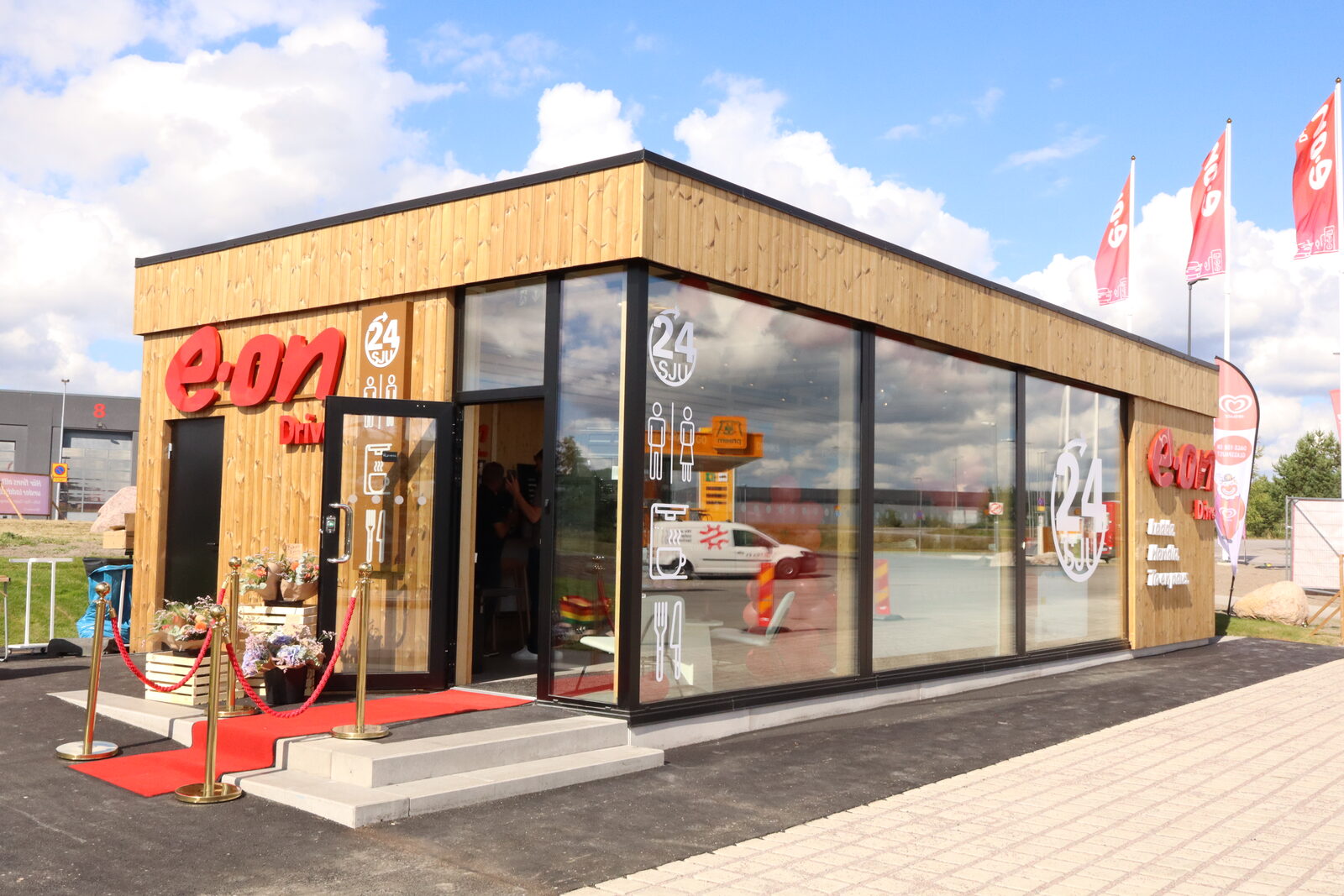
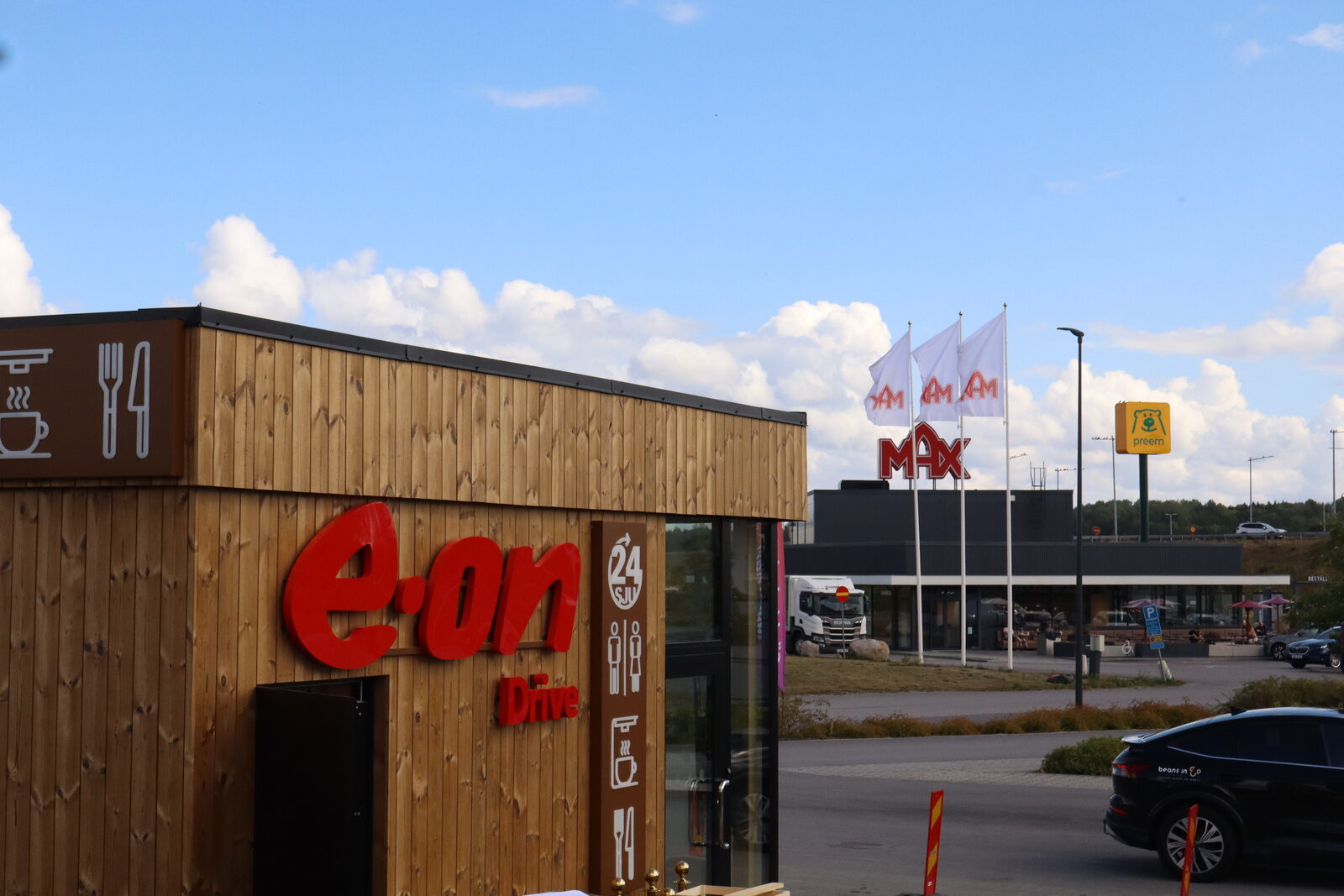
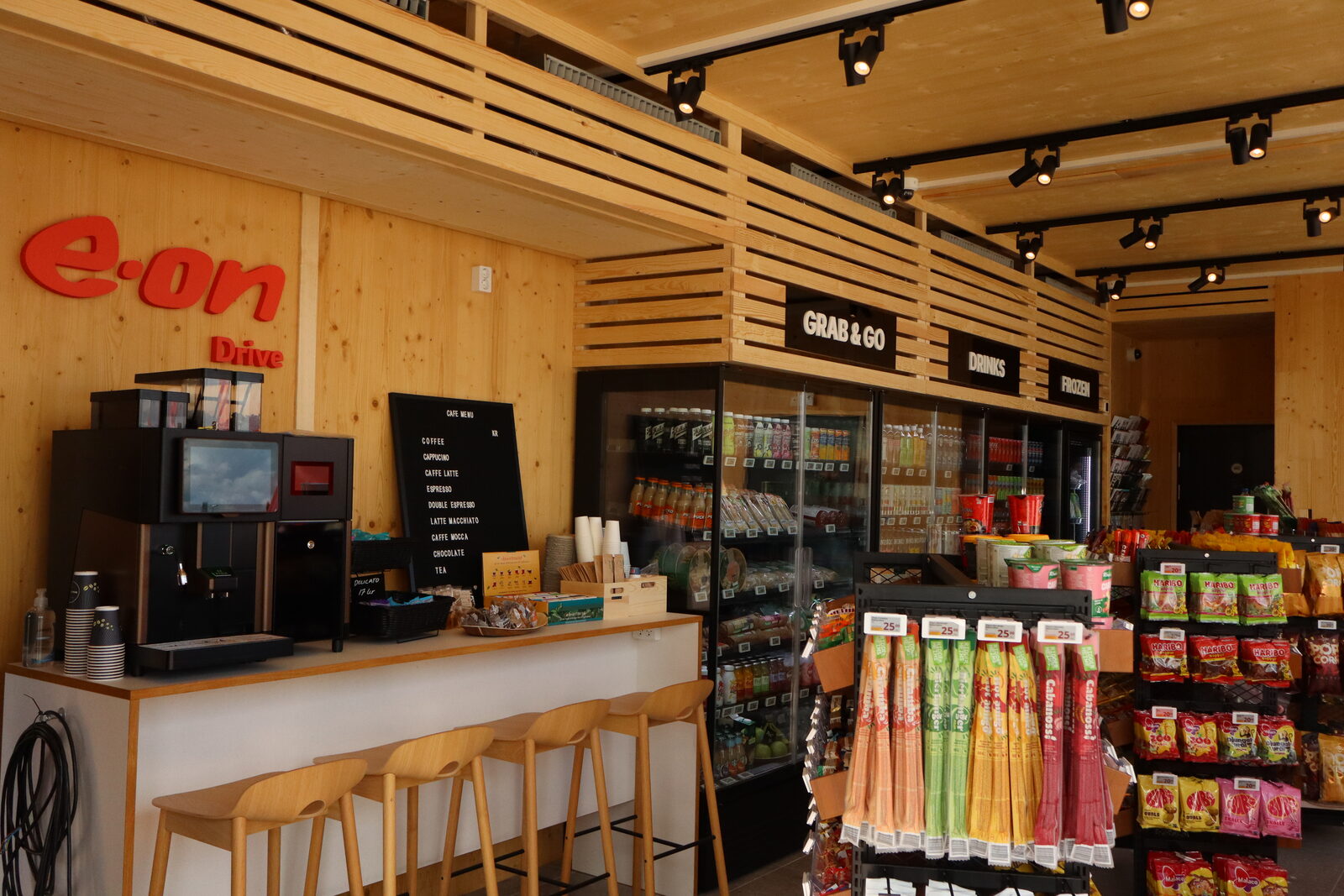
Unmanned retail fails on empty shelves, an unclean toilet and a broken machine that nobody noticed. It rarely fails on technology.
Åby is run through our own operations system: scheduled checkpoints and rounds, deviation reporting with photographs, task assignment, sign and campaign management, and customer ratings collected by QR code in the lounge against a satisfaction target of 4.6 out of 5. The site owner receives monthly reporting.
That system is the reason we can offer the format as something repeatable rather than as one location that happened to work.
The questions we ask before recommending a configuration:
Pick two or three sites from your portfolio. We produce an establishment analysis for each: traffic, catchment, competing offer, recommended configuration and an operating case. From there it becomes a decision per site rather than a decision about a concept.